Thursday, July 28, 2016

My Exit Strategy
1) Identify the exit strategy you plan to make. Do you intend to sell your business in the next 5 years for a large return? Do you intend to stay with the business for several decades and retire? Do you intend to protect the venture as a family business, and pass it down to your children?
This venture is a get in and get out, make the money while you can plan. Technology moves so rapidly that my innovation will be quickly replaced or matched by competition. The key for me is showing the potential and need for my product before others competitors enter. Once the need is shown I will sell the business for a nice profit and move on.
2) Why have you selected this particular exit strategy?
I like to be well rounded in all areas of my life. I would rather have the money and risk it on another venture or multiple ventures with a little more money involved.
3) How do you think your exit strategy has influenced the other decisions you've made in your concept? For instance, has it influenced how you have identified an opportunity? Has it influenced your growth intentions or how you plan to acquire and use resources?
The way identified the opportunity was affected by the fact that I am solely motivated on profit while I have noticed others care more about social or emotional beliefs that may help others with little to no profit. Further, growth for the business is minimal in my mind. I want to start the business, show potential, then let someone else either make it bigger or change it. I just do not have the funds to grow it and the risk is still quiet substantial for me, but an investor may be willing to take on the risk.
The way identified the opportunity was affected by the fact that I am solely motivated on profit while I have noticed others care more about social or emotional beliefs that may help others with little to no profit. Further, growth for the business is minimal in my mind. I want to start the business, show potential, then let someone else either make it bigger or change it. I just do not have the funds to grow it and the risk is still quiet substantial for me, but an investor may be willing to take on the risk.

Wednesday, July 20, 2016
Celebrating Failure
1) Tell us about a time this past semester that you failed -- whether in this class, or outside of this class. Don't spare any details! It'd be even better if there was something you tried several times this semester, and failed each time.
A time I failed this semester was trying to learn how to swim. Like many of you I grew up and learned how to doggy paddle, but never really learned how to swim. I was training for my first triathlon and had to be able to swim about half a mile. My first day in the pool I could barely make it 25 meters. My stroke was off, I sucked more water than air in with each gasp. I felt like I ran a mile after swimming 50 meters. This trend of failure continued for almost a month and a half. Eventually my water confidence rose and I swam a continuous 50m. A week later I swam 100m. Two weeks later I hit 500m. Two weeks before my triathlon I swam a continuous half mile. I was so happy that a little less than 4 months ago I could barely do 25m and now I was swimming 1000m like it was nothing.
A time I failed this semester was trying to learn how to swim. Like many of you I grew up and learned how to doggy paddle, but never really learned how to swim. I was training for my first triathlon and had to be able to swim about half a mile. My first day in the pool I could barely make it 25 meters. My stroke was off, I sucked more water than air in with each gasp. I felt like I ran a mile after swimming 50 meters. This trend of failure continued for almost a month and a half. Eventually my water confidence rose and I swam a continuous 50m. A week later I swam 100m. Two weeks later I hit 500m. Two weeks before my triathlon I swam a continuous half mile. I was so happy that a little less than 4 months ago I could barely do 25m and now I was swimming 1000m like it was nothing.
2) Tell us what you learned from it.
I would consider myself as an athletic body type and continue to play sports like rugby, but i had never trained to swim. I learned that if you do not consistently practice a skill then it will not develop. Further, I learned that perseverance can be the key factor in anything you do to succeed. Finally, the key to anything is belief. I willed myself to accomplish the goal.
I would consider myself as an athletic body type and continue to play sports like rugby, but i had never trained to swim. I learned that if you do not consistently practice a skill then it will not develop. Further, I learned that perseverance can be the key factor in anything you do to succeed. Finally, the key to anything is belief. I willed myself to accomplish the goal.
3) Reflect, in general, on what you think about failure. Failure is hard, isn't it? It's embarrassing, sure, but it also means that we have to change something about ourselves. Talk about how you handle failure (emotionally, behaviorally). Finally, talk about how this class has changed your perspective on failure -- are you more likely to take a risk now than you were four months ago?
Failure just motivates me. Sometimes I am a little to cautious because I want to be the best at everything I do and I do not want others to see my weaknesses. Sometimes you have to put yourself out there, take a risk and hope for the best along with some hard work. I would be more inclined to take risks after the past four months since I faced one of my slight fears, the water. The class makes this obvious in that failure can come with anything you do, you just have to be determined to overcome it.
Me just coming out of the swim portion at the St. Anthony's triathlon.

Failure just motivates me. Sometimes I am a little to cautious because I want to be the best at everything I do and I do not want others to see my weaknesses. Sometimes you have to put yourself out there, take a risk and hope for the best along with some hard work. I would be more inclined to take risks after the past four months since I faced one of my slight fears, the water. The class makes this obvious in that failure can come with anything you do, you just have to be determined to overcome it.
Me just coming out of the swim portion at the St. Anthony's triathlon.
Tuesday, July 19, 2016
Venture Concept No. 1
Opportunity:
The unmet need involves the millions of people who
have begun to and continue to shop online for clothes. From interviews most
people shop online for a large variety of reasons. Some want to take advantage
of the cheap prices or large sales. Others like the convenience of shopping
from home to avoid the rush at the mall. The list of reasons to shop online is
abundant and growing. A specific description includes; ages 15 to 35. Mostly females with a growing male
population. These are working people with part-time or full-time jobs. They are
technologically literate. They are on their phones or computers 15 or more
hours a week. They can navigate online markets, do their own research, and
check multiple sites. They are cable of downloading and using simple software.
They can set up and use simple technology like cameras and USB cables. They
shop online with regularity. Only a portion of their clothing purchases come
from offline. They are trend conscious people that are looking to save time and
money by shopping online. However, those that shop online face a
myriad of problems when it comes to ordering clothes. First off, each brand and
style fit differently on every person. Sometimes a medium in one brand is too
tight while another brand the same size is too large. Further, when trying the
clothes on, they may fit but do not give a flattering appearance to your
specific body type. Sometimes users shy away from buying clothes online for
these reasons. Also, the return policy may make it difficult to remedy the
problems. The advancement in technology and the desire for instant
gratification in our culture are a few of the forces creating this opportunity.
Currently customers must go to the stores to try on clothes and then order them
online or roll dice and hope their online orders live up to expectations. Most
people are loyal to whatever brand or trend is popular. The opportunity is
massive with almost two thirds of all US adults shopping online monthly. The
window of opportunity is closing as more people recognize the need are
developing technology to meet it, but if you are first to the market then the
projection technology may last 10 or more years depending on how quickly other
technologies advance.
Innovation:
My solution to fix the ordering, returning, and
repeating cycle is virtual projection technology. The software would take four
photos of you to create a 3D image of your body. The user would then select
their desired clothing and see it mapped onto their body through their mobile
phone or computer. This would show online shoppers the correct size and see how
the style looks on their own body without ever even trying the clothes on. My
software could be used with your mobile phone or laptop web cameras. Pictures
of individuals could be taken with modest clothes on with high contrast. The 3D
body image is saved to storage for future reference. Privacy would be a big
selling point when it comes to images of people. The price to sell this technology
to companies would be 10,000 dollars or more. This would be the price for the setup
of the software on their site and licensing rights. The privacy and maintenance
services would be a negotiated price.
Venture
Concept:
The end user would be the online shoppers for
different online clothing retailers. The buyers would be the online retailers.
My selling point to retailers is multifaceted. I would first start by
explaining the issues that their customers have with online shopping.
Explaining that with increased user satisfaction there would be an increase in
customer loyalty and more than likely a sales increase. The next step would be
to find out how much money companies lose each year on the expenses associated
with returns. Preventing returns would reduce transportation, fuel costs,
postage, and any number of smaller issues.
Others suggest that there is possible competition for this
service. The recent fad is mirrors inside of department stores that photograph
an item you try on and you can switch colors or compared them to other outfits
tried on. My argument is that currently this technology is far too expensive to
bring to a mass scale. Further, it requires users to actually try on all the
items of clothing in the store to compare them. My software would allow you to
take a onetime photo and then with a few mouse clicks users let the computer
try it on for them and project the 3D image onto their screens. Using the users
own computer or phone would be an inexpensive way to reduce costs and spreading
the product to the masses.
Business would have me at the top as president, three
major officers below me for the different divisions, then five officers under
them for different parts of the company, and then the rest of the employees.
The three officers would vote on company direction and I would be the final
vote.
Three
minor Elements:
My
top resource is the virtual projection technology. It is more important
because it the main driving force in the company, it would be unique and hard
to copy. My secret sauce is my well rounded background in engineering
and coding along with personal attributes like hard work and competitive.
I want to create an interactive program with a 3D printer so that customers can feel the actual texture of the clothes, for the next step of my venture.
For me in five years I want the launch of the company
to go well and sell in within the first 3 years as soon as the profits are
great enough. I want to take that money and then begin my own aerospace
company. First venture will allow me to make mistakes with minimal risk, learn
how to manage people, and learn the tricks of trade with regard to the business
world.
Sunday, July 17, 2016
Elevator Pitch No. 3
1) The pitch.
2) A reflection on the feedback you received from your last pitch.
Feedback
I like that you included what your feedback was into your post so that I have a better idea of what you're talking about when you discuss your improvements. Statistics are always good in that it shows that you truly know what you're talking about and that your idea is necessary. The concept of it being "from the comfort of your home" and also filmed at home I also think is a good touch, because it gives your point a good visual. Keep up the good work and I think your idea is going to turn out great.
Hey Caleb. You have a great introduction for your online shopping service. I think it's a really awesome idea to have this product for those who have difficulty with finding their sizes in clothing stores and for those, like me, who are too lazy to go out most of the time. Your speech was well-rehearsed and very calm. I would say that a mention of your vision for this product would be the only thing missing from this attempt.
Hi Caleb,
Great job, I think you did a great job looking into the criticism and improving your pitch. I really like the tone and you definitely connect well with the audience. I think adding the stats was a great touch and really help drive home the point. Great job overall and really impressed with this pitch!
Hi Caleb,
I think you did a great job with the pitch. You showed that there is a clear demand for the product and used statistics to show that online shopping is not a fad-like trend. One suggestion, mention the actual product earlier. Until you mentioned your venture I thought you were starting a clothing company. Overall great job!
Reflection
A lot of the feedback was positive without too much criticism. The two points that came up were mention my vision for the product and possibly bring the product up sooner. I agree with stating my vision, that could be a good point to show investors and buyers what to expect. I do not agree with bringing the product up sooner. I think as of now the set up of the problem and then solution flow nicely and get the point across.
Feedback
I like that you included what your feedback was into your post so that I have a better idea of what you're talking about when you discuss your improvements. Statistics are always good in that it shows that you truly know what you're talking about and that your idea is necessary. The concept of it being "from the comfort of your home" and also filmed at home I also think is a good touch, because it gives your point a good visual. Keep up the good work and I think your idea is going to turn out great.
Hey Caleb. You have a great introduction for your online shopping service. I think it's a really awesome idea to have this product for those who have difficulty with finding their sizes in clothing stores and for those, like me, who are too lazy to go out most of the time. Your speech was well-rehearsed and very calm. I would say that a mention of your vision for this product would be the only thing missing from this attempt.
Hi Caleb,
Great job, I think you did a great job looking into the criticism and improving your pitch. I really like the tone and you definitely connect well with the audience. I think adding the stats was a great touch and really help drive home the point. Great job overall and really impressed with this pitch!
Hi Caleb,
I think you did a great job with the pitch. You showed that there is a clear demand for the product and used statistics to show that online shopping is not a fad-like trend. One suggestion, mention the actual product earlier. Until you mentioned your venture I thought you were starting a clothing company. Overall great job!
Reflection
A lot of the feedback was positive without too much criticism. The two points that came up were mention my vision for the product and possibly bring the product up sooner. I agree with stating my vision, that could be a good point to show investors and buyers what to expect. I do not agree with bringing the product up sooner. I think as of now the set up of the problem and then solution flow nicely and get the point across.
3) What did you change, based on the feedback?
From pitch No. 2 to No. 3 I added a quick sentence about my vision for the future from suggestion of the feedback.
Amazon Whisperer
- Describe the revenue drivers
Software Licensing: Allows users to have access to the software and enjoy the product
Software Upgrades: Constantly improves the user experience
Hardware: Improves user experience and software technology
- Describe what kind of product offering you believe should be next. What's the next thing your customers want?
Next they want improvements in how well the software works, possibly 3D cameras that are portable, and maybe the ability to feel the texture of the clothes with a 3D printer attachment with different materials.
- Describe how this "next" thing will enhance your existing product/service offering. Does it improve the user experience, does it increase customer switching costs, does it foster customer loyalty, etc.?
All of the improvements would enhance user experience.
- Go to Amazon and try to find a product that is similar to the one you want to offer next. Describe the product. Include a picture of the product.
Not the software I want to design but a part of the user experience I could incorporate.
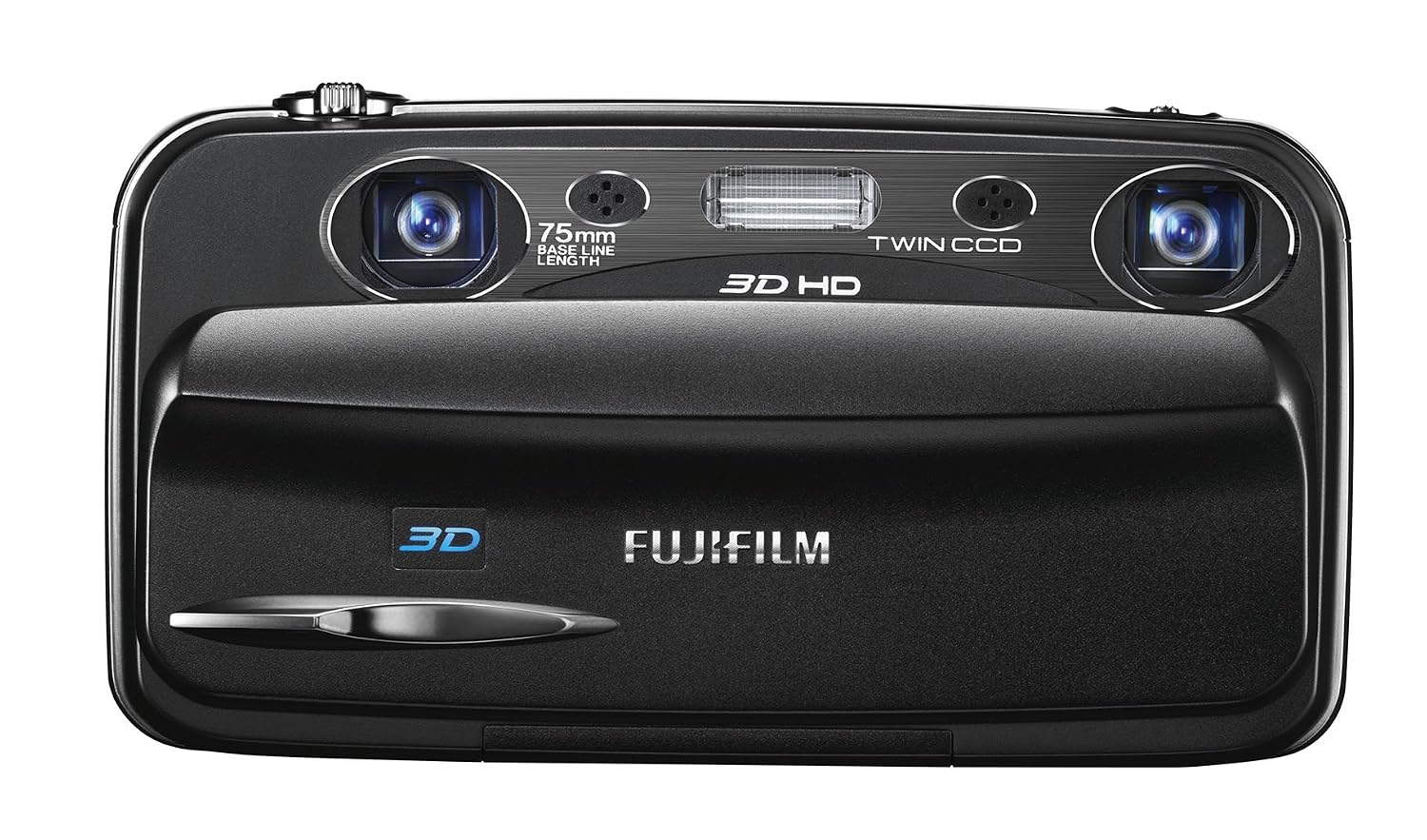
Fujifilm FinePix Real 3D W3 Digital Camera:
- Capture high-resolution images in 2D and 3D
- Record HD 3D movies (720p resolution); dual 10-megapixel CCD and lens system
- 3.5-inch widescreen autostereoscopic LCD displays images and movies in 3D instantly, with no glasses required
- mini-HDMI output jack offers easy connection to a compatible 3D HDTV; view images and movies instantly in 3D
- Capture images and movies to SD/SDHC memory cards (not included)
- What are the customer reviews for the product? What, exactly, do customers not like about the product? What do they like about it?
Customer reviews are all 4 and 5 stars but only 12 reviews.
Did not like that prints only provided through the company on special paper.
Need foreground to see 3D effects
Poor package software
- Describe what design/usability changes you'd make to the product.
Make it more user friendly and easy to use without experience on both the hardware and software. Possibly help develop new software in the camera to promote 3D effects without foreground.
- Describe why you think this product would make a good addition to your current product/service offering.
It would be great to help people get a real 3D view and it may make the design and development of the software easier and less complicated.
My Unfair Advantage
1.) Virtual Projection Coding Knowledge
Value: Allows the set up of the technology
Rare: Somewhat, there are experts but not everyone has the knowledge
Inimitable: Takes some knowledge an experience over a couple of years
Non-substitutable: No real substitute for the knowledge gained through experience
2.) Virtual Projection Technology
3.) Software Licensing
4.) Access to 3D Printing Technology
5.) Classmates with Knowledge of Coding
6.) Multiple Contacts Involved in the Computer Industry
7.) Able to Connect and Sell Ideas
8.) Engineering Background
9.) Capital
10.) Tenacious
Inimitable: Takes some knowledge an experience over a couple of years
Non-substitutable: No real substitute for the knowledge gained through experience
2.) Virtual Projection Technology
Value: A rough dollar amount could be 500k dollars.
Rare: There would be no other like it on the market
Inimitable: could be copied easily with another code
Non-substitutable: No current substitute
Value: No dollar amount, but it could prevent others from using it
Rare: Yes to avoid others from stealing it
Inimitable: Not easy to copy
Non-substitutable: No substitute
Value: No dollar amount but it helps with rapid prototyping
Rare: No, many people have this access
Inimitable: Yes easy to copy
Non-substitutable: Old manufacturing methods like clay, but nothing to match speed and ease
Value: Helps the start up of making the code and software
Rare: No
Inimitable: Yes, hard to find others to help for little to no pay
Non-substitutable: Could find others for hire
Value: Allows the introduction to investors and possibly buyers
Rare: Contacts are not rare but it is a valuable resource
Inimitable: Yes hard to copy
Non-substitutable: Yes you could make your own new contacts
Value: Important when pitching to investors and buyers
Rare: Yes, many people have good ideas but cannot get others to believe in them
Inimitable: Yes
Non-substitutable: Could hire someone who is a professional salesman
Value: Gives insight into development and design, prevents bringing others in
Rare: Somewhat, since the education process in rigorous
Inimitable: Yes
Non-substitutable: Could have a more mechanical experience
Value: $5000 available for investment
Rare: Not rare, and hardly a lot.
Inimitable: Cannot legally copy
Non-substitutable: No real substitute for cold hard cash
Value: No monetary value, but it can help you get through tough times
Rare: Yes
Inimitable: Yes, hard to copy
Non-substitutable: No substitute
My top resource is the virtual projection technology.
It is more important because it the main driving force in the company, it would be unique and hard to copy.
My top resource is the virtual projection technology.
It is more important because it the main driving force in the company, it would be unique and hard to copy.
Sunday, July 10, 2016
Reading Reflection No. 2
Makers; The New Industrial Revolution, by: Chris Anderson
1) What was the general theme or argument of the book?
Manufacturing and the ways of the traditional industrial revolution are no longer growing countries and economies as they once were. Automation and and globalization have contributed to a new and rapidly growing type of revolution produced by "Makers". Makers are people that are enthusiastic about something and decide to develop and share their knowledge online. Further they develop their own ideas through the use of technology, like 3D printers, to cut out the traditional middle men of the old industrial revolution. Anderson suggests that the DIY movement is taking over and that more people are shifting to bits instead of atoms. This idea is that software is the way of the future and the potentially new market for the new industrial revolution.
Manufacturing and the ways of the traditional industrial revolution are no longer growing countries and economies as they once were. Automation and and globalization have contributed to a new and rapidly growing type of revolution produced by "Makers". Makers are people that are enthusiastic about something and decide to develop and share their knowledge online. Further they develop their own ideas through the use of technology, like 3D printers, to cut out the traditional middle men of the old industrial revolution. Anderson suggests that the DIY movement is taking over and that more people are shifting to bits instead of atoms. This idea is that software is the way of the future and the potentially new market for the new industrial revolution.
2) How did the book, in your opinion, connect with and enhance what you are learning in ENT 3003?
Anderson's book completely explained the old version of entrepreneurship. Someone has hundreds of ideas, tries to develop them, spend a bunch of money on a patent, then they sell their idea off for royalties in production. Generally these people were tinkerers and many of their ideas were never realized or they never really made money. He then explains how as more technology is developed and information is shared online, this process changes. People have access to prototyping machines or they can order smaller batches of production. All of these advances have changed the way the entrepreneur operates. It relates to the class by describing unmet needs, and the process of production, and the new ways to earn profit, or motivate people.
Anderson's book completely explained the old version of entrepreneurship. Someone has hundreds of ideas, tries to develop them, spend a bunch of money on a patent, then they sell their idea off for royalties in production. Generally these people were tinkerers and many of their ideas were never realized or they never really made money. He then explains how as more technology is developed and information is shared online, this process changes. People have access to prototyping machines or they can order smaller batches of production. All of these advances have changed the way the entrepreneur operates. It relates to the class by describing unmet needs, and the process of production, and the new ways to earn profit, or motivate people.
3) If you had to design an exercise for this class, based on the book you read, what would that exercise involve?
I would suggest that students learn to create a new small toy prototype. They could use software provided by the school and the 3D printing machines in the library. I would then ask them to compare the costs of this method vs a traditional manufacturing method.
I would suggest that students learn to create a new small toy prototype. They could use software provided by the school and the 3D printing machines in the library. I would then ask them to compare the costs of this method vs a traditional manufacturing method.
4) What was your biggest surprise or 'aha' moment when reading the book? In other words, what did you learn that differed most from your expectations?
The aha moment was realizing how DIY movement is furthering the new industrial revolution. It almost suggests that people and their ideas, not products, are driving this revolution.
The aha moment was realizing how DIY movement is furthering the new industrial revolution. It almost suggests that people and their ideas, not products, are driving this revolution.
Friday, July 8, 2016
Idea Napkin No. 2
You
I am Caleb Dean and I am an aspiring entrepreneur with a strong work ethic and unrelenting desire for success. Some of my talents include the ability to read people, connect with people, and project a strong presence. I am currently a Mechanical and Aerospace Engineering student. My background in design and technology should allow me to help be a contributing part of the development of the technology, but not the sole designer. After a few public speaking events, I would say that I am a competent public speaker with concise yet informative points. The ability to understand the technological side of the product and communicate with others allows me to believe that my main role in my business is selling the product. As a pitch man I would target potential investors and sell the product to other businesses. I see myself as just a guiding force with the development of the technology. In my life the business would most likely consume most of my time until it became profitable to sell off. Then I would start again.
What are you offering to customers?
The product is a software that virtually maps clothes on a 3D figure of a person using a laptop or web camera. With the product there are accessory products such as; stands, mounts, cases, etc. Further, with the software upgrade, maintenance, and privacy protection services will be offered. The software would be sold to the online companies while the tangible products could be sold to end users.
Who are you offering it to?
The following answer may appear slightly confusing. For my product there will be the users and the actual buyers. The users are online clothing shoppers. For the users a typical demographic would be male and females, ages 15-45, with any income, and access to the internet in a developed country. The buyers would be large businesses with online clothing stores. These fashion companies can include your every day relaxing clothes all the way up to designer clothing. Any clothing retailer would fit the possible demographic for buyers.
Why do they care?
The buyers care because it saves money and increases user satisfaction. User or online shoppers would be able to enjoy an interactive system to virtually try on clothes now. The time going to stores is saved, number of returned packages will decrease, and user satisfaction increases. As the user experience becomes more enjoyable, the user has a better post-purchase feeling which encourages them to return for more. In the long run companies buying the software will increase sales as more users comeback and the logistics nightmare of returns is all but ended.
What are your competencies?
This product is different from anything else on the market. Currently the mirror technology or projection technology still requires you to try physical clothes on in order to view how they look later. Further, any other comparable technology is not in a compact and affordable form for users yet. My technology would literally only require a one time picture from the comfort of your home computer.
Evaluation
I think for the most part all of these elements fit nicely together. The hardest thing to do is to distinguish that the users (online shoppers) have an unmet need when it comes to online shopping. This unmet need by the users translates into an unmet need for the buyers (online clothing companies). The buyers unmet need is that their customers are not satisfied, which can cause a loss in sales. Relating these two aspects is very important and showing that one causes the other is the key to selling the product to companies.
What are you offering to customers?
The product is a software that virtually maps clothes on a 3D figure of a person using a laptop or web camera. With the product there are accessory products such as; stands, mounts, cases, etc. Further, with the software upgrade, maintenance, and privacy protection services will be offered. The software would be sold to the online companies while the tangible products could be sold to end users.
Who are you offering it to?
The following answer may appear slightly confusing. For my product there will be the users and the actual buyers. The users are online clothing shoppers. For the users a typical demographic would be male and females, ages 15-45, with any income, and access to the internet in a developed country. The buyers would be large businesses with online clothing stores. These fashion companies can include your every day relaxing clothes all the way up to designer clothing. Any clothing retailer would fit the possible demographic for buyers.
Why do they care?
The buyers care because it saves money and increases user satisfaction. User or online shoppers would be able to enjoy an interactive system to virtually try on clothes now. The time going to stores is saved, number of returned packages will decrease, and user satisfaction increases. As the user experience becomes more enjoyable, the user has a better post-purchase feeling which encourages them to return for more. In the long run companies buying the software will increase sales as more users comeback and the logistics nightmare of returns is all but ended.
What are your competencies?
This product is different from anything else on the market. Currently the mirror technology or projection technology still requires you to try physical clothes on in order to view how they look later. Further, any other comparable technology is not in a compact and affordable form for users yet. My technology would literally only require a one time picture from the comfort of your home computer.
Evaluation
I think for the most part all of these elements fit nicely together. The hardest thing to do is to distinguish that the users (online shoppers) have an unmet need when it comes to online shopping. This unmet need by the users translates into an unmet need for the buyers (online clothing companies). The buyers unmet need is that their customers are not satisfied, which can cause a loss in sales. Relating these two aspects is very important and showing that one causes the other is the key to selling the product to companies.
Feedback Memo
I only received one comment for feedback on my first idea napkin. The feedback indicated that there was actually an unmet need, their needed to be more information on implementation, more logistics, liked who the actual buyer was, and keep the cost low for the end user. So it reaffirmed that the product could have a place in the market. Some of the logistics and implementation I believe would be better suited for a business plan and not an idea napkin. From my own reflection I made a few more changes. My direction in the company was narrowed to pitching the product to investors and other businesses that are the buyers. Further I specified to who the different products would be sold to, the online companies and their customers as well. Overall, there was not much changed from the original idea napkin.Sunday, July 3, 2016
My Secret Sauce
1) Describe five ways in which you think you have human capital that is truly unique. What is it about you, exactly, that makes you different? Write this up in a detailed list.
1. Competitive to a Fault: Drive me to succeed and beat out the competition.
2. Good Talker: Able to relate to a lot of people and understand there needs and how I can help them.
3. Dedicated: Keeps me working hard on a project until the job is done.
4. Adaptable: Able to adjust to changing requirements and needs.
2. Good Talker: Able to relate to a lot of people and understand there needs and how I can help them.
3. Dedicated: Keeps me working hard on a project until the job is done.
4. Adaptable: Able to adjust to changing requirements and needs.
5. Well Rounded: Good at many things with knowledge in multiple subjects.
2) Interview the five people who know you the best. Ask them what they think makes you different -- remember, focus on your knowledge, skills, abilities, emotions -- in other words, your human capital. Try to stay away from discussing your other types of capital (such as who you know). Record each interview. In your blog post, please post each interview, as well as a two-three sentence summary of each interview, explaining what your key takeaways are.
Interview 1: Some major takeaways are that I am aggressive, addictive personality, and well rounded. Suggested that although they sound negative they can be good qualities.
Interview 2: Had the main human capital of caring, perfectionists, and competitive. Suggested that all of these traits went together to make me do well in all my work and look to push myself and others to achieve has high as they can.
Interview 3: Human capital talked about included; hardworking, competitive, able to relate to others, loyal and analytical. Talked about expecting a certain level of achievement from myself and others.
Interview 4: Talked about how I was a quick learner, independent, competitive, and loyal. Noticed a desire to do things on my own and do a lot of different things.
Interview 5: Said I was hardworking, and easy to be around. Also recognized that sometimes I am too competitive.
Interview 1: Some major takeaways are that I am aggressive, addictive personality, and well rounded. Suggested that although they sound negative they can be good qualities.
Interview 2: Had the main human capital of caring, perfectionists, and competitive. Suggested that all of these traits went together to make me do well in all my work and look to push myself and others to achieve has high as they can.
Interview 3: Human capital talked about included; hardworking, competitive, able to relate to others, loyal and analytical. Talked about expecting a certain level of achievement from myself and others.
Interview 4: Talked about how I was a quick learner, independent, competitive, and loyal. Noticed a desire to do things on my own and do a lot of different things.
Interview 5: Said I was hardworking, and easy to be around. Also recognized that sometimes I am too competitive.
3) Reflect on the differences. How do you see yourself, and how do others see you? Are there differences in how you assess yourself compared to others? What do you think causes these differences? Do you think your interviewees are correct about you? Finally, going back to your list from part 1, would you make any corrections to the list? How?
Yea some of the interviews brought up my same ideas about me like competitive, dedicated, and easy to relate to people. Some of the things they brought up that I did not see were loyalty, analytical, and caring. The differences are that they see me actions in a different light then I see my own. Also, many times we see ourselves from an introspective point of view instead of from the outside looking in. Further sometimes we feel weak in an area but appear strong to others. Yes I think the interviews were mostly correct. I would keep my list about the same because I think it can encompass so of the others.
My Customer's Avatar
Customer Avatar
Ages 15 to 35. Mostly females with a growing male population. These are working people with part-time or full-time jobs. They are technologically literate. They are on their phones or computers 15 or more hours a week. They can navigate online markets, do their own research, and check multiple sites. They are cable of downloading and using simple software. They can set up and use simple technology like cameras and USB cables. they shop online with regularity. Only a portion of their clothing purchases come from offline. They are trend conscious people that are looking to save time and money by shopping online.Questions
What do you have in common with the customer avatar?I am in the same age range. I have a part time job. I have experience with technology. I only shop online occasionally. I like to save time and money.
If you have anything in common with the avatar, do you think that is a coincidence? Why?
No it is not a coincidence because my idea stems from the things I have seen in my life and my experiences. Since I created the product it would make sense that my customer avatar matches some of my qualities.

Friday, July 1, 2016
Elevator Pitch No. 2
The Pitch
https://www.youtube.com/watch?v=cT_7qjxNWOA
Reflection of Feedback
Feedback:
Hey Caleb, I loved the introduction to your pitch because I think that it grabs many people's attention since it's a common problem. Overall great job!
I think this is a great idea! There are so many issues with ordering clothes online and I'm impressed with your ideas to tackle these problems. Also you did a great job being very charismatic in your pitch, it really drew me in and maintained my attention. I also like your outfit choice- it really adds to your points nicely. I think this idea has a lot of potential and although there is always room for improvement I think you are definitely on the right path to a super successful business idea!
Hello Caleb, definitely have an idea that is going to be in the market sometime in the future. Now I have seen other examples of such camera work in stores before so this is a good thing to look into and learn from. You presentation skills are well, only thing needed to help spice it up is adding statistics and numbers on how online shopping is as a market from all possible aspects. That will help bring the "wow" factor in your pitch.
Certainly a good idea, and very reflective of the direction the fashion industry has been moving in. I think there are some stores that actually have digital mirrors in dressing rooms that offer similar services. Good pitch, might be good to throw in details about how much clothing is ordered online already to emphasize how big the potential market is.
I personally love this idea. I have tried online shopping plenty of times and have specifically passed on buying clothes because I am worried they won't fit properly. The only thing I can say to look into is what kind of market this may work in. Although it may sound ideal-- some people want to see what the color looks like on them or other criteria and not just the fit of the garment. Great idea overall!
Hey Caleb, I loved the introduction to your pitch because I think that it grabs many people's attention since it's a common problem. Overall great job!
I think this is a great idea! There are so many issues with ordering clothes online and I'm impressed with your ideas to tackle these problems. Also you did a great job being very charismatic in your pitch, it really drew me in and maintained my attention. I also like your outfit choice- it really adds to your points nicely. I think this idea has a lot of potential and although there is always room for improvement I think you are definitely on the right path to a super successful business idea!
Hello Caleb, definitely have an idea that is going to be in the market sometime in the future. Now I have seen other examples of such camera work in stores before so this is a good thing to look into and learn from. You presentation skills are well, only thing needed to help spice it up is adding statistics and numbers on how online shopping is as a market from all possible aspects. That will help bring the "wow" factor in your pitch.
Certainly a good idea, and very reflective of the direction the fashion industry has been moving in. I think there are some stores that actually have digital mirrors in dressing rooms that offer similar services. Good pitch, might be good to throw in details about how much clothing is ordered online already to emphasize how big the potential market is.
I personally love this idea. I have tried online shopping plenty of times and have specifically passed on buying clothes because I am worried they won't fit properly. The only thing I can say to look into is what kind of market this may work in. Although it may sound ideal-- some people want to see what the color looks like on them or other criteria and not just the fit of the garment. Great idea overall!
Reflection:
What was most important to me was if I was able to connect with my audience. Many of the reviews said I was able to accomplish that. Further, the idea came up several times that I should include more statistics about online shopping, which I agree with, to show potential investors or buyers of the product that there is an actual market and unmet need. Surprising to me because I have not thought of the idea yet, was that there are other criteria that my product may not meet when people go to buy clothes. This has got me thinking on ways I could incorporate other solutions into my current product. Like some others have suggested, some clothing stores have digital mirrors. In my research it appears that you have to try all the clothes on and the digital mirror takes a picture of it on you. This requires actually trying every piece of clothing on. My product would only require you to stand and take a picture and let the software do the work of mapping it onto the body. Further, the digital mirrors are so few in department stores and have an unknown cost to buy, which I am assuming is very high.
Changes Made
I added more statistics in the middle of the pitch. Two thirds of US adults shop online at least monthly. This was to to show the growing market and potential of the product. I also addressed the difference between my product and potential competition. I said that mine was going to be cheaper and that you can do it from the comfort of your home.
Subscribe to:
Posts (Atom)